Katja Wolf · 4 September 2026
Lichen Symbiosis Unraveled: What Smooth Formations Reveal About Ecosystem Health Monitoring
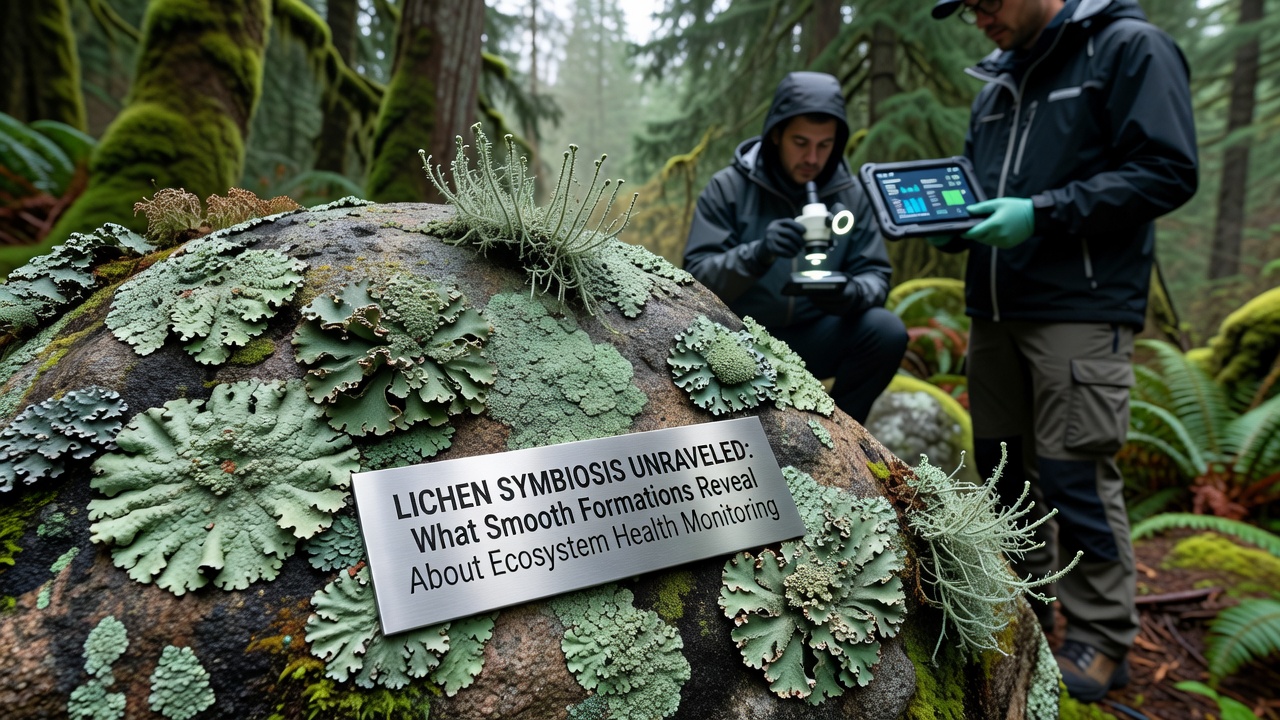
Lichens represent a classic example of symbiosis where a fungus partners with an alga or cyanobacterium to form a stable organism that thrives in environments ranging from arctic tundra to urban rooftops, and researchers continue to examine how these partnerships function at the cellular level while tracking changes across wide geographic areas. Smooth formations appear as crust-like or flattened growths that lack the branching structures seen in fruticose types, and these surfaces often signal specific responses to moisture levels, light exposure, and chemical composition of the substrate they colonize.
Scientists studying these patterns note that the smoothness results from tight integration between the fungal hyphae and photosynthetic partner, which allows efficient nutrient exchange and protection from desiccation. Data collected over decades shows that certain smooth species dominate in areas with stable humidity yet limited nutrient availability, and this distribution helps map microclimates within larger ecosystems.
Understanding the Symbiotic Mechanisms
The fungal component supplies structural support and absorbs water and minerals while the alga or cyanobacterium performs photosynthesis to produce carbohydrates that both partners share, and laboratory experiments have isolated these exchanges to demonstrate how the relationship adjusts under varying temperatures and pollution loads. Observers note that when smooth formations expand across rock or bark surfaces they often outcompete rougher lichen types because the continuous thallus reduces water loss and creates a barrier against competing organisms.
Genetic analyses reveal that the fungal partner in many smooth lichens belongs to the Ascomycota phylum, and these species frequently exhibit slower growth rates that correlate with long-term environmental stability. Researchers have documented cases where smooth lichens recolonize sites after disturbance events such as wildfires or logging, and the timing of their return provides measurable indicators of recovery progress.
Smooth Formations as Indicators of Ecosystem Conditions
Field surveys across North American and European forests demonstrate that the presence and extent of smooth lichen formations track changes in air quality, particularly sulfur dioxide and nitrogen deposition levels, and monitoring programs use the abundance of sensitive species to generate pollution indices that align with instrumental measurements from government agencies. In regions where industrial emissions have declined, smooth lichens have shown increased coverage on previously affected substrates, and these shifts occur over spans of five to ten years.
Soil scientists incorporate lichen data into assessments of heavy metal accumulation because certain smooth species accumulate elements such as lead and cadmium at rates proportional to environmental concentrations, and this bioaccumulation allows mapping of contamination gradients without repeated soil sampling. Australian environmental reports from the past decade highlight how smooth lichen communities on granite outcrops reflect both rainfall patterns and wind-borne nutrient inputs from distant agricultural zones.
Remote sensing techniques now combine satellite imagery with ground-truth lichen mapping to estimate biomass and health across inaccessible terrain, and these methods rely on the spectral signatures produced by the smooth surfaces which differ from those of mosses or bare rock. In September 2026, coordinated international teams plan to release updated datasets that integrate lichen monitoring with climate variables collected from multiple continents, and the resulting models aim to refine predictions of ecosystem responses to shifting precipitation regimes.
Integration into Broader Health Monitoring Frameworks
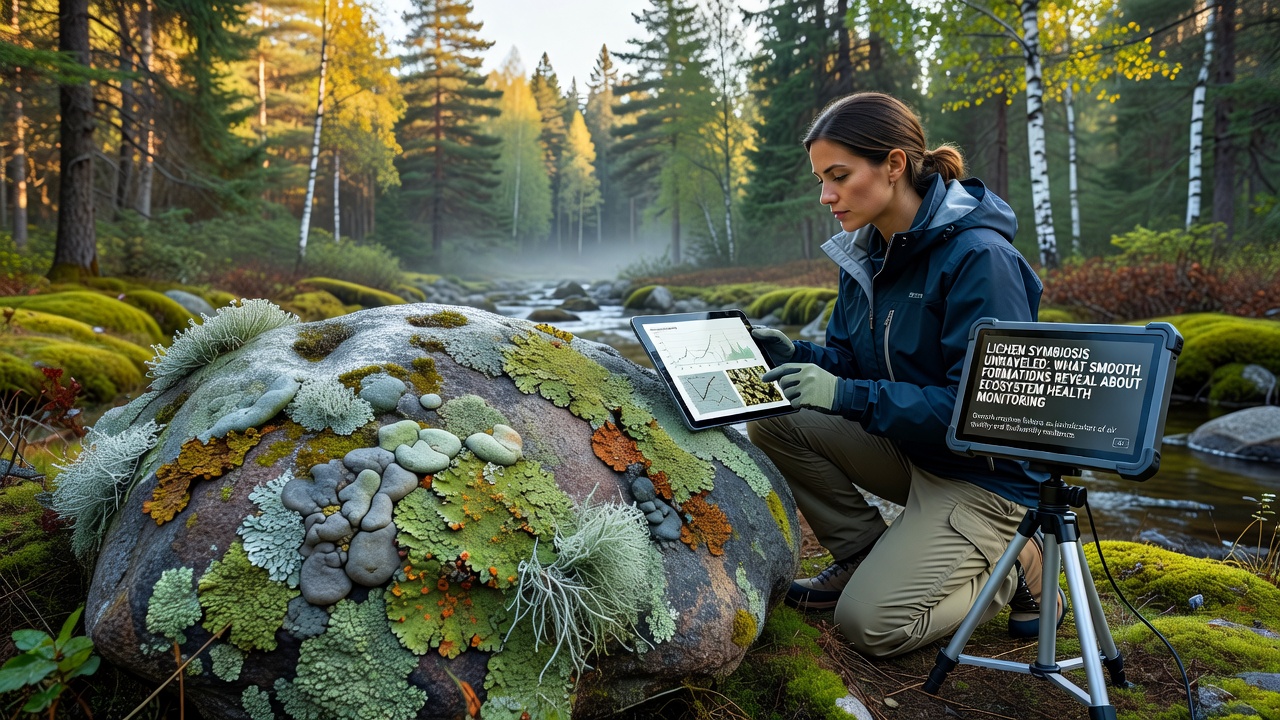
National parks in Canada and New Zealand have incorporated lichen surveys into their standard ecological monitoring protocols because the organisms respond quickly to changes that affect vascular plants and animals over longer timescales, and the resulting data feeds into adaptive management decisions for habitat protection. Community science initiatives train volunteers to photograph and upload records of smooth lichen distributions, which expands geographic coverage while maintaining consistency through standardized identification keys.
Forestry agencies use lichen-based indices alongside tree ring analysis and soil chemistry tests to evaluate stand health, and the combined datasets reveal correlations between lichen decline and reduced tree growth rates under chronic stress. European Union biodiversity reports cite lichen monitoring as one component of the Natura 2000 network assessments, where smooth formation coverage serves as a proxy for habitat quality in protected areas.
Future Directions in Research and Application
Advances in molecular techniques allow identification of lichen partners from environmental DNA samples collected from smooth surfaces, and this approach reduces the need for destructive sampling while revealing hidden diversity within apparently uniform thalli. Modeling studies project that continued warming will alter the elevational ranges of many smooth lichen species, and field validation of these projections relies on repeated transects established at multiple latitudes.
Restoration ecologists experiment with transplanting smooth lichens onto degraded substrates to accelerate recolonization and improve microhabitat conditions for invertebrates and seedlings, and early results indicate higher survival when transplants match local genetic strains. Data repositories maintained by universities and research institutes compile these findings to support meta-analyses that span decades and continents.
Conclusion
Smooth lichen formations provide measurable links between microscopic symbiosis and landscape-scale environmental conditions, and ongoing monitoring programs continue to refine how these organisms contribute to ecosystem health assessments. The combination of traditional field methods with emerging technologies expands the precision and reach of lichen-based indicators while supporting conservation strategies across varied biomes.